
Is Being a Locum Physician for Everyone? No! And Here’s Why.
The Real Trade-Offs Between W-2 and 1099 Medicine
Locum tenens work is often romanticized as the “freedom doctor” lifestyle—choose your own schedule, travel, and make double the pay of an employed colleague. But like most things in medicine, the reality is more nuanced. Whether locum work is the right fit depends on your financial goals, risk tolerance, and mindset.
The W-2 Route: Stability, Simplicity, and Predictability
For physicians who value consistency, the employed W-2 path offers clear advantages. Taxes are withheld automatically, benefits like health insurance and retirement plans are bundled in, and paychecks arrive on time every two weeks.
Pros:
Predictable income and work hours
Employer-provided health insurance, malpractice, CME, and retirement match
Easier to qualify for mortgages or loans due to stable pay
Cons:
Lower hourly pay (often 30–50% less than locums)
Limited control over schedule, vacation, and workload
“Golden handcuffs” from benefits and bureaucracy
From a wealth generation standpoint, the W-2 model is slower and safer—like a bond fund. You can build wealth steadily, but it’s difficult to accelerate beyond your salary ceiling.
The 1099 Route: Freedom, Control, and Wealth Velocity
Independent contractor (1099) physicians—especially locums—have more flexibility and earning power. They can negotiate directly with hospitals or staffing groups, work fewer months per year, and still earn a full-time income.
Pros:
Higher pay (often 2–3× employed hourly rates)
Complete control over schedule, location, and volume
Powerful tax advantages (deduct travel, housing, CME, equipment, health insurance, and more)
Access to self-employed retirement accounts with massive contribution limits (Solo 401(k), SEP IRA)
Cons:
Must manage quarterly taxes and bookkeeping
No paid vacation, sick leave, or employer-subsidized benefits
Income can be variable or unpredictable
Requires discipline and business acumen
From a wealth generation perspective, 1099 work is a high-yield investment. You keep more of what you earn and can funnel pre-tax dollars into large retirement contributions—but you must treat your career like a business.
Workload and Lifestyle Differences
W-2: Typically full schedules, high patient volumes, and administrative duties.
1099/Locum: Often more focused on pure clinical work—no meetings, no committees, no bureaucracy. You work, get paid, and go home.
The trade-off is security vs. autonomy. W-2 physicians trade freedom for predictability. Locums trade predictability for opportunity.
Retirement and Tax Benefits Comparison
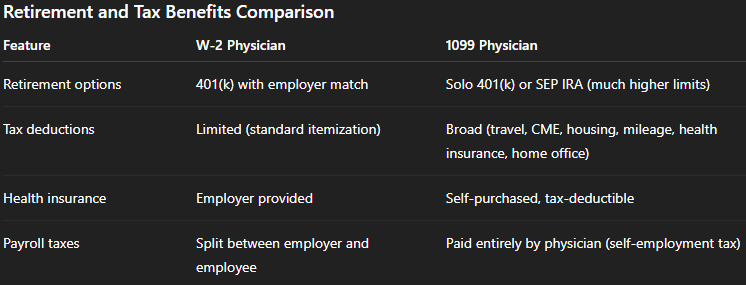
The 1099 model allows for active tax planning—a powerful lever for building wealth faster than traditional employment.
Who Thrives in Each Model
Best suited for W-2 employment:
Physicians who prefer financial stability and predictability
Those who don’t want to manage taxes, contracts, or travel logistics
Clinicians who value team culture and long-term institutional loyalty
Best suited for 1099/Locum work:
Physicians with an entrepreneurial or independent mindset
Those who want to maximize income and minimize bureaucracy
Individuals comfortable managing finances, contracts, and variability
Doctors pursuing early financial independence or semi-retirement
Final Thoughts
Being a locum physician isn’t for everyone—but for those who value autonomy, wealth acceleration, and a lifestyle on their own terms, it’s a powerful alternative.
In the end, the choice isn’t just between W-2 and 1099. It’s between security and freedom, stability and growth, and being managed vs. managing yourself.
Whichever path you choose, make sure it aligns with your mindset, your goals, and the kind of life you want medicine to support—not the other way around.